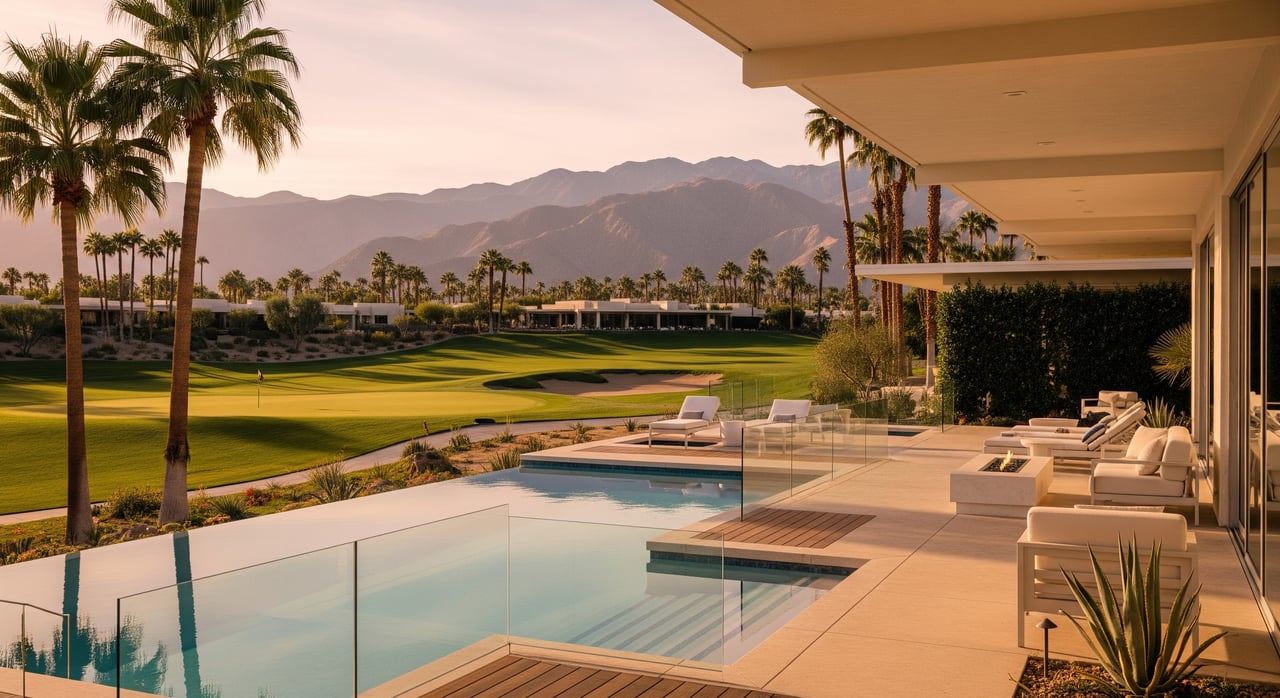
Trying to choose between Palm Desert and Rancho Mirage for your club lifestyle? Both sit in the Coachella Valley and offer sunshine, golf, racquet sports, dining, and social calendars that draw people from around the country. The right fit comes down to how you plan to use your club, what costs you’re comfortable with, and the kind of community you want at your doorstep. In this guide, you’ll compare lifestyle tradeoffs, club types, costs, and due diligence steps so you can move forward with confidence. Let’s dive in.
Quick snapshot: two desert neighbors
Palm Desert and Rancho Mirage are adjacent cities in Riverside County’s Coachella Valley. You get the same desert climate, easy access to regional attractions, and a short drive to Palm Springs International Airport.
- Rancho Mirage is generally viewed as smaller and more resort‑oriented, with several exclusive country clubs and estates alongside notable resort properties.
- Palm Desert is larger and offers a broader mix of retail and dining, including the El Paseo district, along with many HOA communities and popular 55+ options.
City lines matter less than the specific neighborhood or development. Many clubs and communities span boundaries, so focus first on the club and community experience, then confirm the city address.
Club models you’ll find
Understanding how clubs operate will help you compare costs and access.
- Private clubs: Member‑only access with initiation fees and ongoing dues. Some have food and beverage minimums and very active social calendars, especially in peak season.
- Semi‑private clubs: Memberships with preferred tee times and discounts, while also allowing some public or resort play.
- Public or resort courses: Pay‑as‑you‑go golf and amenities. No initiation fee, but per‑use costs can be higher.
- HOA‑included amenities: In many gated communities, including 55+ neighborhoods, club‑style amenities are included in HOA fees or available via a community membership managed by the HOA.
Local examples include public or semi‑private options such as Desert Willow Golf Resort in Palm Desert and a range of private and semi‑private country clubs in Rancho Mirage. Palm Desert also has large 55+ communities, such as Sun City–type developments, known for robust amenity and social calendars. Rancho Mirage also features cultural landmarks like Sunnylands, which adds to its resort identity. Always confirm current club names, access rules, and membership models because these can change.
Who thrives where
There isn’t a single “best” city for club living. It depends on how you want to use your home and your club.
- Golf purists: You may lean toward clubs that prioritize course conditions, tee time access, and tournament calendars. You’ll find these in both cities; compare specific club policies and maintenance standards.
- Resort‑style seekers: If you want an exclusive, retreat‑like feel with refined dining and a quieter residential pace, Rancho Mirage’s smaller, resort‑oriented character can appeal.
- Amenity maximizers: If you value a wide range of dining, shopping, and mixed club options, Palm Desert’s larger retail scene and variety of HOA and semi‑private choices can be attractive.
- 55+ and social calendar fans: Palm Desert offers several age‑restricted communities with packed social programming and accessible amenities. You can enjoy a club lifestyle without a private club initiation.
- Racquet and pickleball enthusiasts: Both cities reflect the region’s growth in racquet sports. Prioritize communities with multiple courts and organized play.
Seasonality and how it affects value
The Coachella Valley runs on a strong seasonal cycle. Population and club activity surge in fall and winter and ease in the hot summer months.
- Membership experience: Expect more events, tournaments, and social programs during peak season. Off‑season is quieter and can offer easier access to facilities.
- Rental demand: If you plan to rent your property, winter attracts more demand. Rules vary widely by HOA and club, so verify policies before you plan income.
- Selling strategy: Listing a club‑focused home in high season often reaches the most engaged buyers. However, well‑located properties can sell year‑round with the right marketing.
Real estate options and tradeoffs
You’ll see a mix of property types that align with different club lifestyles.
- Golf‑course homes: Premium views and easy access. Pricing depends on the course’s reputation and the club’s exclusivity.
- Gated golf communities: Many have on‑site private or semi‑private clubs. Confirm whether membership is mandatory or optional.
- Condos and townhomes: Common in Palm Desert resort developments and attractive if you want low‑maintenance living with pools, fitness, and social spaces.
- 55+ communities: Frequent in Palm Desert and nearby areas. These often include extensive amenities and activities without private club initiation.
Exclusivity usually narrows the buyer pool but can support value at the luxury level. Higher ongoing costs can limit appeal, so it’s important to understand the full carrying cost before you buy.
What to budget beyond the mortgage
Club living includes costs beyond your loan and property taxes. Build a realistic budget.
- Initiation fees: One‑time costs to join private clubs vary widely by exclusivity.
- Monthly or annual dues: Cover operations, programming, and access.
- Food and beverage minimums: Some private clubs require minimum spending.
- Course use fees: Cart fees, guest fees, and tee time policies can affect your total cost.
- HOA dues: Cover shared amenities and operations. Some HOAs assess separately for club maintenance.
- Special assessments: Private clubs and HOAs may levy capital assessments for major projects.
- Transfer rules: Some memberships transfer with a property sale; others do not. Transfer fees may apply.
Your total monthly outlay can look very different from the list price. Align your housing budget with initiation costs, dues, and HOA fees before you write an offer.
Palm Desert: breadth and convenience
Palm Desert offers a wide range of living options and club access styles.
- Variety of communities: From condos near retail to 55+ neighborhoods with full social calendars, you can tailor the experience to your lifestyle.
- Resort and public access: If you prefer pay‑as‑you‑go golf and amenities without a long‑term commitment, Palm Desert has attractive options.
- Retail and dining: The El Paseo district and broader shopping make day‑to‑day living convenient and social.
If you want flexibility, a mix of club models, and strong amenity access, Palm Desert is an easy city to navigate for club life.
Rancho Mirage: refined and resort‑oriented
Rancho Mirage is known for a smaller, more exclusive feel with multiple private and semi‑private country clubs.
- Exclusive settings: Estate neighborhoods and private clubs are part of the city’s identity.
- Resort lifestyle: Refined dining, hospitality, and cultural attractions shape the area’s tone.
- Quiet residential pace: Many buyers appreciate the sense of retreat while staying close to regional amenities.
If you are seeking an upscale, quieter club environment with a resort feel, Rancho Mirage can be a strong match.
Due diligence checklist for buyers
Use this list when you evaluate a property tied to a club or amenity set.
- Confirm the membership model: private, semi‑private, public, or HOA‑managed.
- Ask about initiation fees, payment options, and refund policies.
- Verify monthly or annual dues, recent increases, and what they cover.
- Check for food and beverage minimums, event minimums, cart or locker fees.
- Clarify mandatory vs optional membership when buying in a specific community.
- Ask whether the membership transfers with the property and what fees apply.
- Review capital reserves and any special assessments in the past 5–10 years.
- Request financials or reserve studies from HOAs or private clubs when available.
- Understand peak season calendars, summer operations, and tee time policies.
- For families, confirm junior programming and facility access for all ages.
Questions sellers should prepare to answer
If you are listing a club‑oriented home, help buyers understand value and costs.
- Is club access included in the HOA, or is it a separate contract?
- Are there CC&Rs that require or prohibit membership?
- What are the current dues, minimums, and any pending capital projects?
- Has the club or HOA had recent assessments or ownership changes?
- Is the membership transferable, and what benefits can a buyer receive at closing?
Clear, verified information builds trust and can streamline your sale.
How to choose your best fit
Start with your lifestyle priorities, then match them to a property and club model.
- Rank your must‑haves: golf access, pickleball, spa and fitness, dining, or social clubs and events.
- Set a total budget: include initiation fees, dues, HOA, and typical seasonal costs.
- Decide on usage: seasonal retreat, full‑time living, or a hybrid with occasional rentals.
- Tour in peak season and off‑season: programs and access can feel different.
- Compare transfer rules: memberships that transfer with a home can add value.
With these steps, you can align Palm Desert’s breadth or Rancho Mirage’s refined focus to your goals.
How we help you evaluate
You get the most clarity by pairing property tours with club due diligence. As a senior‑led team focused on Coachella Valley resort and luxury communities, we help you:
- Map your lifestyle to the right neighborhoods and club models.
- Coordinate calls with membership offices and HOA managers.
- Review CC&Rs and membership agreements for transferability and fees.
- Benchmark comparable sales for club‑adjacent homes.
- Plan timing around seasonal activity for buying or listing.
If you value discretion, responsiveness, and a concierge process, you will appreciate a senior‑executed approach that keeps you informed at every step.
Ready to compare specific communities and narrow your short list? Reach out to the Mark Wise Group for a private consultation tailored to your club lifestyle.
FAQs
What’s the main difference between Palm Desert and Rancho Mirage for club living?
- Rancho Mirage is generally smaller and more resort‑oriented with exclusive clubs and estates, while Palm Desert offers broader retail options, mixed club models, and several 55+ communities.
How does seasonality in the Coachella Valley affect club value?
- Activity peaks in fall and winter with fuller social calendars and events; summer is quieter, which affects membership experience, rental demand, and optimal listing timing.
What club costs should I expect beyond the home price?
- Plan for initiation fees, ongoing dues, potential food and beverage minimums, course fees, HOA dues, and possible special assessments or transfer fees.
Are club memberships transferable when I buy a home?
- Policies vary by club and HOA; some memberships transfer with a sale, others do not. Always verify transfer rules and any associated fees before you write an offer.
What should 55+ buyers consider in Palm Desert and Rancho Mirage?
- Many 55+ communities in Palm Desert and nearby areas offer robust amenities and social calendars managed by the HOA, often without private club initiation fees. Confirm HOA rules, dues, and programming to fit your needs.