Thinking about a home in a Palm Desert gated community and wondering what the HOA dues really cover? You are not alone. HOA fees can shape your monthly budget, affect financing, and influence long-term ownership costs. In this guide, you will learn what is typically included, what is not, how to read the fine print, and how to compare communities with confidence. Let’s dive in.
Palm Desert HOA basics
Palm Desert offers a wide range of gated options: single-family neighborhoods, condominium and townhome communities, age-restricted active-adult developments, and master-planned resort and golf properties. Each type handles maintenance and amenities differently, which is why dues vary so widely.
The desert climate also matters. Hot, dry conditions increase costs for pools, irrigation, and exterior surfaces. Many HOAs manage extensive landscaping, seasonal plantings, and pool operations, which can raise dues. Utilities like electricity and gas are provided by regional providers such as Southern California Edison and SoCalGas, and some communities use bulk contracts for cable or internet. What is included depends on the governing documents.
What Palm Desert HOA dues include
Common-area care
Most dues cover routine maintenance and repairs for shared spaces. Expect line items for landscaping, irrigation, exterior lighting, sidewalks, entry features, and gate equipment. In communities with extensive greenbelts or water features, landscape and irrigation can be significant budget drivers.
Amenities and security
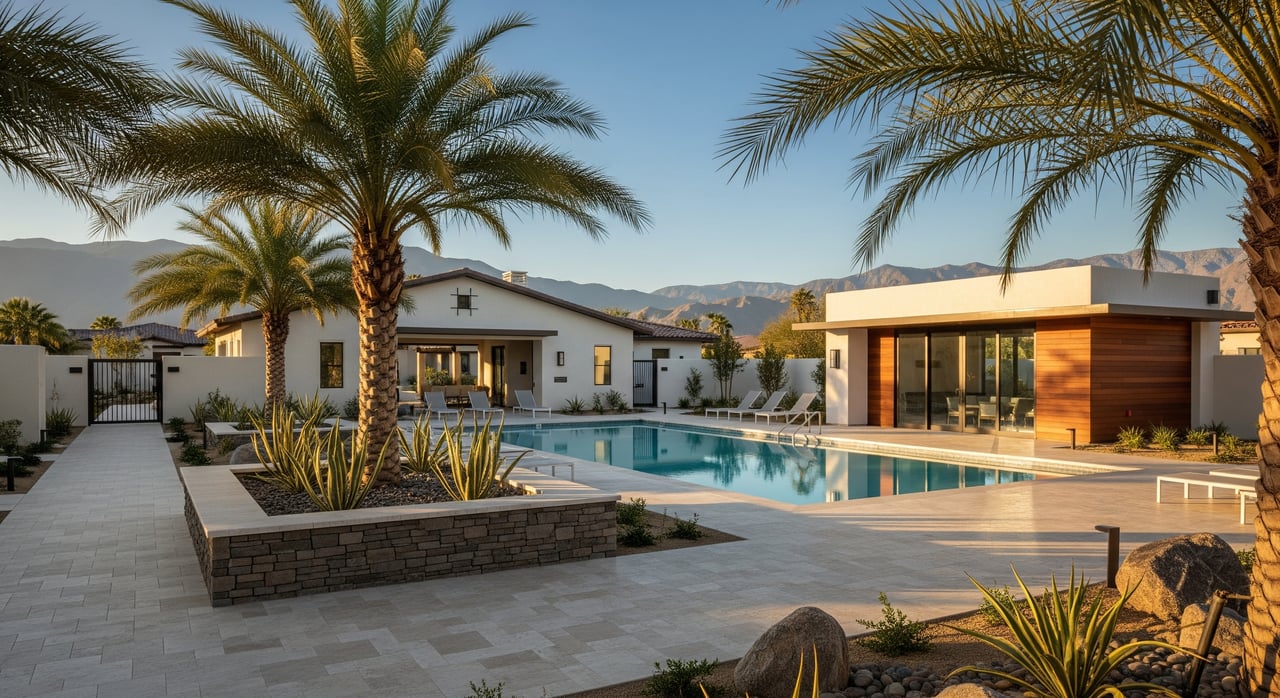
Resort-style amenities are common. Dues often fund pool and spa upkeep, fitness center operations, and courts like tennis or pickleball. Gate security may include guard services or contracted patrols. Guard staffing is typically one of the larger costs in amenitized, guard-gated neighborhoods.
Buildings and exteriors for condos
If you are buying a condominium or townhome, the association may maintain roofing, exterior painting, and building envelopes. This can simplify ownership, though it usually means higher association services per unit compared to single-family HOAs.
Insurance and reserves
Associations carry master insurance for common areas and, for many condo buildings, exterior structures. Coverage varies by community. A portion of your dues also goes to reserves, the long-term savings used for major repairs and replacements, such as roofing, paving, or pool replastering.
Management and administration
Most HOAs contract with a management company for daily administration, bookkeeping, and compliance. You may see legal costs, audits, and administrative fees in the operating budget.
What dues usually do not include
Owner-paid utilities and policies
You typically pay for your own electricity, gas, and individually metered water. Property taxes are always separate. Owners are responsible for their own insurance policies, such as a condo HO-6 or a standard homeowner policy for single-family homes.
Club and golf fees
Country-club or golf memberships are often separate. Some communities have a mandatory club assessment that shows up in your association billing, while others offer optional memberships. Always confirm how memberships work and whether fees are transferable or required.
Special assessments
If reserves are low or a major project is not fully funded, the HOA may levy a special assessment. These can be one-time or spread across several years. You should check for past, current, or proposed assessments before you commit.
Condo vs. single-family vs. master associations
Condo associations tend to include more services, including building exteriors and certain insurance coverages. That is why condo dues often appear higher per unit. Single-family HOAs usually focus on common-area maintenance and security.
Many resort communities also have a master association that handles shared amenities and security across multiple neighborhoods. In these areas, a sub-association may collect additional dues for neighborhood-specific upkeep. Make sure you understand both layers of fees and what each one covers.
Budget drivers in Palm Desert
Amenities and staffing
Pools, spas, clubhouses, fitness centers, and courts require regular maintenance and staffing. Guard-gated entries and security patrols increase operating costs and can be a large line item.
Age and reserves
Older communities may face larger capital projects for roofs, resurfacing, or building systems. If reserves are underfunded, the risk of assessments or dues increases rises. Review the reserve study to see what is planned.
Water and landscape needs
Irrigation and landscape replacement add up in a desert climate. Water costs and conservation rules influence planning and budgets. Xeriscape designs can help, but transitions require funding.
Vendor and utility contracts
Local labor costs, utility rates, and multi-year vendor contracts affect annual budgets. Management fees and professional services also play a role.
How to read HOA documents
California associations operate under the Davis-Stirling Common Interest Development Act. The documents listed below will tell you what dues cover, how the HOA is funded, and what is on the horizon.
- Current year budget and recent financial statements
- Reserve study or funding plan and capital project schedules
- Resale or estoppel certificate that confirms dues and delinquencies
- CC&Rs, bylaws, articles, and rules and regulations
- Board meeting minutes for the past 12 to 24 months
- Insurance certificates and master policy details, including deductibles
- Vendor contracts for major services like security, landscaping, and pools
- Litigation disclosures, if any
Review these carefully during your contingency period. If anything is unclear, ask follow-up questions in writing.
Questions to ask before you buy
- What exactly do the dues include, line by line?
- How often have dues increased over the past 5 to 10 years, and why?
- Are there planned capital projects in the next 1 to 5 years, and are they funded?
- What is the current reserve balance and funding ratio?
- Have special assessments been levied recently, and are any planned?
- What is the delinquency rate for dues, and what is the collection policy?
- Are there rental rules, pet rules, or architectural restrictions I should know?
- Are solar panels or EV charging governed by specific guidelines?
- Do dues include bulk cable or internet, and with which provider?
- What are the resale package fees and delivery timeframes?
Red flags to watch
- Minimal or outdated reserve study, or very low reserves
- Frequent or recent special assessments
- High delinquency rates or ongoing litigation
- Limited transparency from management
- Confusion between master and sub-association allocations
Financing and negotiation tips
DTI and lender requirements
Lenders include HOA dues in your debt-to-income calculation, so accurate numbers matter. Very high dues or pending litigation can trigger additional lender scrutiny. Confirm exact dues and fee schedules early to avoid surprises.
Planning for assessments
Budget for periodic increases, especially in amenity-rich or older communities. If a project is planned but underfunded, consider that risk in your offer strategy. You can request documentation and clarify expectations during contingencies.
Timing the resale package
Resale packages take time and often carry a fee. Build in enough time in escrow for delivery and review. If you are selling, order early to keep the timeline on track.
For sellers in gated communities
- Order the resale or estoppel package before listing or early in escrow.
- Resolve known violations or fines, or disclose them clearly.
- Prepare budgets, reserve studies, minutes, and insurance details for buyer review.
- Clarify whether dues include master and sub-association fees.
- Share any information on recent assessments or planned projects upfront.
A well-prepared disclosure package signals stability and can protect your timeline.
Insurance and risk
HOAs carry a master policy for common areas, and many condo policies include exterior structures. Coverage varies by community, so verify whether your interior, personal property, and liability need a separate HO-6 or homeowner policy. Check deductibles on the master policy, since high deductibles can lead to owner assessments after a major loss.
Standard HOA policies do not usually include earthquake or flood insurance. Review your risk profile and speak with an insurance professional about additional coverage options.
Lifestyle trade-offs
Gated living in Palm Desert offers benefits like maintained grounds, shared amenities, and controlled entries. Those benefits come with trade-offs: rules and restrictions, regular dues, and board oversight of exterior changes. The right community balances your lifestyle preferences with a budget and governance style you are comfortable with.
How we help you compare communities
You deserve clarity before you commit. We help you read budgets and reserve studies, identify master versus sub-association fees, and confirm what is truly included. We coordinate directly with management to secure complete resale documentation, keep escrow on schedule, and highlight risks or opportunities that matter to you.
If you are exploring club communities or resort-style neighborhoods, we provide grounded guidance on amenities, ownership costs, and membership structures so you can choose with confidence.
Ready to evaluate a specific property or compare two communities side by side? Connect with the Mark Wise Group for a private consultation.
FAQs
What are typical Palm Desert HOA dues in gated communities?
- Dues vary widely based on property type and amenities, from modest fees in minimal-service HOAs to higher amounts in resort-style or guard-gated communities; confirm exact figures for each property.
Do Palm Desert HOA dues include country-club or golf membership?
- Sometimes; some communities include a mandatory club assessment in dues while others bill memberships separately, so always verify in the governing documents.
How often can a Palm Desert HOA raise dues under California law?
- Increases follow the CC&Rs, bylaws, and state rules; boards can approve certain increases while larger assessments may require member votes, so review the community’s specific provisions.
What is included in a California HOA resale or estoppel package?
- Expect current dues, delinquencies, pending assessments, rules, insurance details, and disclosures about litigation and reserves; request it early to avoid escrow delays.
Are utilities included in Palm Desert HOA dues for gated homes and condos?
- Most HOAs cover common-area utilities; individual electricity, gas, and water are usually owner-paid unless the community has bulk or included services, which you should confirm.
How can I avoid surprise special assessments in a Palm Desert HOA?
- Review the reserve study, budget, planned capital project schedules, recent minutes, and assessment history to gauge funding strength and future risk.