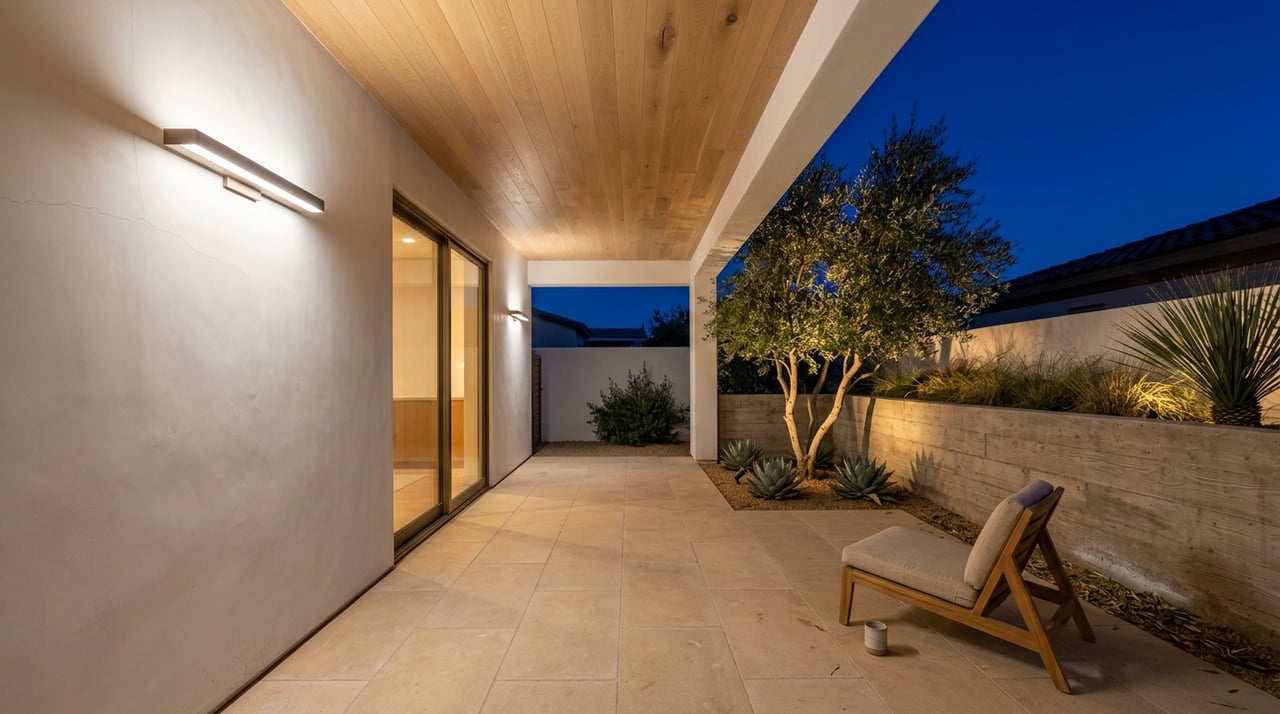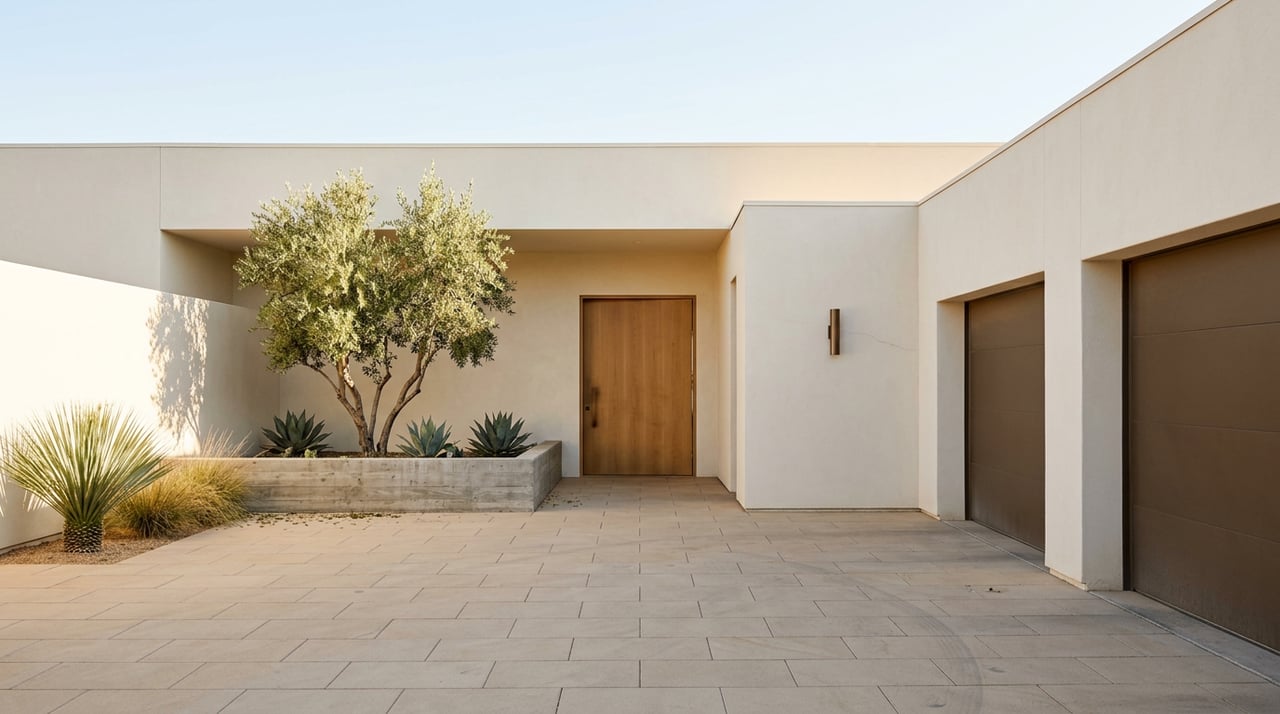
A buyer flew in last winter with a clean pre-approval and a target price pulled from a portal. She walked two homes the same afternoon, both listed at $2.3 million, both inside gates. One carried a monthly club obligation north of $3,700. The other carried nothing at the club at all, because that club does not tie membership to the deed. The sticker price told her almost nothing about what she was actually going to pay.
This is the friction that catches most out-of-area buyers off guard in Indian Wells. The city's headline median gets quoted on every portal, and it is not wrong, but it is describing a market that behaves differently from the one those numbers imply.
The six residential country clubs in Indian Wells do not share a single membership model. Two homes at identical list prices can carry very different total costs, and portal medians blur that fact into a single line item.
The three portal numbers, and why they disagree
Start with the spread. As of February 2026, Redfin put the Indian Wells median sale price at roughly $2.0 million with homes selling in about 62 days, down from 81 days a year earlier. Zillow's ZHVI for the same city sat around $1.25 million, with a May 2026 median sale price near $1.80 million. Movoto's May 2026 list-side median came in at $1.2 million.
Three respected sources, three different numbers. The reader has already seen this and probably assumed one of them is wrong.
None of them is wrong. They are measuring different things. Redfin's number is a monthly closed-sale median in a city where only sixteen homes traded in February 2026. Zillow's ZHVI is a valuation model weighted across every property, including attached condominiums and cottages that price well below the estate tier. Movoto's list median leans on active inventory, which in Indian Wells skews toward smaller units that sit longer. In a market with such low monthly volume, a handful of estate closings inside Toscana or The Vintage Club can drag the median up two or three hundred thousand dollars on their own.
The practical version of that observation: portal medians in Indian Wells describe a blended universe, and the universe you are actually shopping is one slice of it. Which slice depends on which gate you drive through.
The six clubs, and what "membership" actually means
The City of Indian Wells recognizes six residential country clubs inside city limits. The membership structures diverge in ways that matter more than the architecture:
| Club | Ownership tied to membership? | Model |
|---|---|---|
| Eldorado Country Club | No | Invitation only, not tied to real estate |
| The Vintage Club | Yes | Property ownership required for membership |
| Indian Wells Country Club | No | Tiered golf and lifestyle memberships |
| Desert Horizons Country Club | No | Tiered options: full golf, associate, social |
| The Reserve Club | Yes | Equity homeowner membership |
| Toscana Country Club | Yes | Resident equity, golf or sport tiers |
Eldorado is the clearest example of the disconnect. Eldorado Country Club has stated since 1957 that membership is by invitation only. Buying an Eldorado home does not admit you to the club. A buyer who assumes otherwise, sees an attractive price, and closes on the house may find they cannot access the amenities they thought they were buying. The Vintage Club is the mirror image. Homes there price into the eight figures precisely because ownership is the price of admission, and the club states that membership is subject to nomination and approval.
Toscana, Indian Wells Country Club, Desert Horizons, and The Reserve each sit somewhere on the spectrum between those two poles. The correct question is never "how much is the house." It is "what does the club say the deed obligates or entitles me to."
What that does to your monthly carry
Toscana publishes its numbers, which makes it a useful worked example. The club's own membership page currently lists a Golf Membership initiation of $180,000 with monthly dues of $3,720, capped at 550 members. The Sport Membership sits at a $120,000 initiation with $1,590 monthly, capped at 175. The club's separate resident fact sheet has historically shown a Resident Golf tier at $125,000 initiation with $3,070 monthly, and a Resident Sports tier at $70,000 with $1,310 monthly. Any current buyer needs the club to confirm which schedule applies to their specific purchase, because the two documents describe different tiers and both are live on the club's own domain.
Layer on HOA fees at Toscana in the range of $750 to $795 per month, and a full-tier resident member is carrying $4,000 to $4,500 monthly before a single mortgage payment. Over a five-year hold, the club obligation alone runs a quarter of a million dollars on top of the initiation check.
Now do the same math on an Eldorado home at the same sticker. If the buyer is not invited to the club, that $4,000 monthly line item does not exist. Neither does the amenity. The two homes were never really the same product.
This is what portal medians cannot show. Two $2 million transactions in the same zip code in the same month, one carrying an obligated club membership and one carrying none, contribute equally to the median and describe wildly different economic decisions.
Where the leverage sits in 2026
The May 2026 Desert Housing Report from Market Watch put the Coachella Valley months-of-sales ratio at 5.4 months, with 9.6% of homes selling over list, down from 10.6% a year earlier. Median days on market across the valley held at 49.
The more interesting number sits inside the segment analysis. As of April 1, 2026, the months-of-sales ratio for homes priced over $2 million had climbed to 7.1 months, up from 6.9 months a year earlier. Below $500,000 the ratio was 4.6. The valley's top tier is measurably softer than its middle, and Indian Wells sits almost entirely inside that top tier.
For a buyer, that gap is negotiating room. Not on trophy properties inside The Vintage Club or The Reserve where scarcity still governs, but on the broad middle of the club-community market where a well-prepared offer can request seller credits toward closing costs, membership transfer fees, or capital assessments the club may be running. Sellers who priced in 2024 conditions and have carried a listing through two seasons are the ones most likely to entertain those requests.
The Resident Benefit Card, and why it matters to the math
Buying inside Indian Wells city limits comes with one line item that quietly offsets some of the club math. The city issues a Resident Benefit Card that provides preferred pricing at the two-course Indian Wells Golf Resort, the BNP Paribas Open at the Indian Wells Tennis Garden, and the city's four resort properties, including the Hyatt Regency Indian Wells and the Renaissance Esmeralda. As of 2026 the card is available in a virtual format for $45 for the Golf Card and $5 for the Social Card.
For a second-home buyer who plays public golf, attends the tennis tournament, and books local resort stays for guests, the annual value can run into four figures. It is not a substitute for private club membership, but it does reset the base case for a buyer who is on the fence about paying six-figure initiation at all. In some scenarios, an Eldorado-style home without the club, paired with the Resident Benefit Card and public course access, produces a total lifestyle package at a materially lower monthly carry than the club-obligated alternative next door.
Questions worth asking before you write an offer
Does the deed carry a mandatory club obligation? Ask the listing side in writing. The answer determines whether you are buying a house or a house plus a five-figure annual commitment.
What is the current initiation fee schedule and the waitlist status? Published figures on club websites can lag the current fee table by a full cycle. Toscana's live membership page and its resident fact sheet show different tier structures right now. Confirm which one applies to your purchase before you remove contingencies.
Are there open capital assessments? Clubs periodically fund clubhouse renovations, fitness expansions, and golf course rebuilds through member assessments. A pending assessment can add tens of thousands to your first year of ownership. This is a routine ask for the club packet, and a routine seller credit request in a 7.1-month market.
Indian Wells rewards buyers who understand that the median price is a starting point, not an answer. The city's structure, the six clubs, and the fee schedules that sit behind the gates decide what a home actually costs you to own. A good local advisor can put those numbers on the same page as the listing price before you fly out for the second showing, not after.
If you are weighing a purchase inside one of the Indian Wells clubs and want a clear, side-by-side read on total monthly carry, Mark Wise Group offers a private consultation that walks through the club packets, the current fee schedules, and the negotiating room in your target price band. Request a Private Consultation to start the conversation.